The Complete History of the Ashanti Kingdom: Part 9
The Ashanti Kingdom and Global Perspectives
By Kwadwo Afrifa – December 10, 2024 11:10pm
Introduction
The Ashanti Kingdom’s history, culture, and influence extend far beyond the borders of Ghana. Through trade, diplomacy, and later colonial encounters, the Ashanti established connections with global powers, leaving an enduring legacy that resonates worldwide. In contemporary times, the Ashanti’s cultural and historical significance has found representation in academia, popular culture, and global movements, contributing to a broader understanding of Africa’s rich history. This article explores the global impact of the Ashanti Kingdom, highlighting its interactions with the outside world, its role in the African diaspora, and its contributions to modern global discourse.
Ashanti Kingdom and Historical Global Connections
1. Trade and Early Interactions
- Trans-Saharan Trade Networks:
- Before European contact, the Ashanti were integrated into regional trade networks connecting them to North Africa and beyond.
- Gold, kola nuts, and slaves were traded for salt, textiles, and other goods, establishing the Ashanti as a major economic power in West Africa.
- European Encounters:
- The Ashanti’s first direct contact with Europeans came through Portuguese traders in the 15th century, followed by the Dutch, Danes, and British in later centuries.
- The Ashanti engaged in strategic trade with European powers, exchanging gold and slaves for firearms and luxury goods.
2. Diplomatic Engagements
- British Relations:
- The Ashanti’s interactions with the British, characterised by trade, treaties, and wars, underscored their strategic approach to foreign relations.
- Envoys from the Ashanti court were sent to Britain in the 19th century, including a historic delegation in 1817 led by Thomas Edward Bowdich, who documented Ashanti culture and governance.
- Legacy of the Anglo-Ashanti Wars:
- The Ashanti’s fierce resistance during these conflicts highlighted their determination to maintain sovereignty and influenced colonial strategies across Africa.
The Ashanti in the African Diaspora
1. Cultural Continuity in the Diaspora
- The transatlantic slave trade forcibly displaced many Ashanti people, spreading their cultural traditions across the Americas.
- Elements of Ashanti culture, including drumming, storytelling, and spiritual practices, have influenced Afro-Caribbean and African-American cultures.
- For example, Akan-based traditions such as the reverence for ancestors can be observed in Haitian Vodou and Jamaican Maroon communities.
2. Symbol of African Identity
- The Ashanti, particularly through symbols like the Golden Stool and Kente cloth, have become powerful icons of African heritage in the diaspora.
- During the U.S. Civil Rights Movement, leaders like Dr. Martin Luther King Jr. wore Kente cloth as a statement of solidarity with Africa.
3. Inspiration for Pan-Africanism
- The Ashanti Kingdom’s historical independence and cultural richness have inspired Pan-Africanist leaders, including Kwame Nkrumah, who sought to revive Africa’s pre-colonial heritage as a source of pride and unity.
Modern Representations of the Ashanti in Global Discourse
1. Academic and Historical Studies
- The Ashanti Kingdom has been a focus of global scholarship, contributing to a deeper understanding of African statecraft, culture, and resistance to colonialism.
- Scholars like T. C. McCaskie and Ivor Wilks have documented the intricacies of Ashanti governance, spirituality, and social organisation.
- The Ashanti are frequently cited as an example of a pre-colonial African state that successfully combined military power with cultural and political sophistication.
2. Popular Culture and Media
- The Ashanti have been featured in literature, films, and exhibitions, showcasing their history and influence:
- Kente cloth has become a globally recognised fashion statement, symbolising African pride and identity.
- Museums worldwide, including the British Museum, house Ashanti artefacts, though these collections have sparked debates over colonial looting and calls for repatriation.
3. Tourism and Global Recognition
- Kumasi, the Ashanti capital, is a major destination for cultural tourism, attracting visitors to landmarks such as the Manhyia Palace and the Prempeh II Jubilee Museum.
- Festivals like the Adae Kese draw international audiences, celebrating Ashanti heritage on a global stage.
The Ashanti and Contemporary Global Issues
1. Cultural Repatriation
- The Ashanti have been central to global conversations about the restitution of African artefacts taken during colonial rule.
- Items such as Ashanti gold ornaments and ceremonial swords, housed in European museums, are part of ongoing repatriation discussions.
2. Environmental Sustainability
- The Ashanti Region, rich in natural resources, has become a focal point for debates on sustainable mining practices.
- The global gold industry’s reliance on Ashanti gold has raised concerns about environmental degradation and fair distribution of wealth.
3. African Renaissance
- The Ashanti’s cultural legacy continues to inspire efforts to revive and celebrate African heritage.
- Initiatives like Ghana’s “Year of Return” (2019) have drawn attention to Ashanti history, encouraging diasporic Africans to reconnect with their roots.
The Ashanti in Global Symbolism
1. The Golden Stool as a Universal Symbol
- The Golden Stool, representing unity, sovereignty, and spiritual continuity, has become a metaphor for cultural resilience and identity worldwide.
2. Kente Cloth as a Global Icon
- Kente cloth’s adoption by the African diaspora and global communities reflects its universal appeal as a symbol of empowerment and heritage.
3. Ashanti Philosophy and Leadership
- The Ashanti’s model of governance, blending tradition with pragmatism, is increasingly studied as an example of indigenous African leadership adaptable to modern contexts.
Challenges to Global Recognition
1. Misrepresentation in Popular Narratives
- The Ashanti are sometimes depicted reductively in media, focusing solely on warfare or exoticism, rather than the full scope of their achievements.
- Efforts are ongoing to ensure that representations of the Ashanti in global platforms are nuanced and accurate.
2. Cultural Appropriation
- The global popularity of Ashanti symbols, such as Kente cloth, has led to instances of appropriation, where these items are divorced from their cultural significance.
3. Balancing Tradition and Modernity
- As the Ashanti adapt to a globalised world, there is a constant negotiation between preserving traditions and embracing innovation.
Conclusion
The Ashanti Kingdom’s global influence underscores the enduring power of African cultural, political, and spiritual traditions. From their historical role as a dominant West African state to their modern significance in global discourse, the Ashanti continue to inspire pride and unity within Ghana and the broader African diaspora. As debates over cultural restitution, environmental sustainability, and heritage preservation continue, the Ashanti remain at the forefront, exemplifying resilience and adaptability in a changing world.
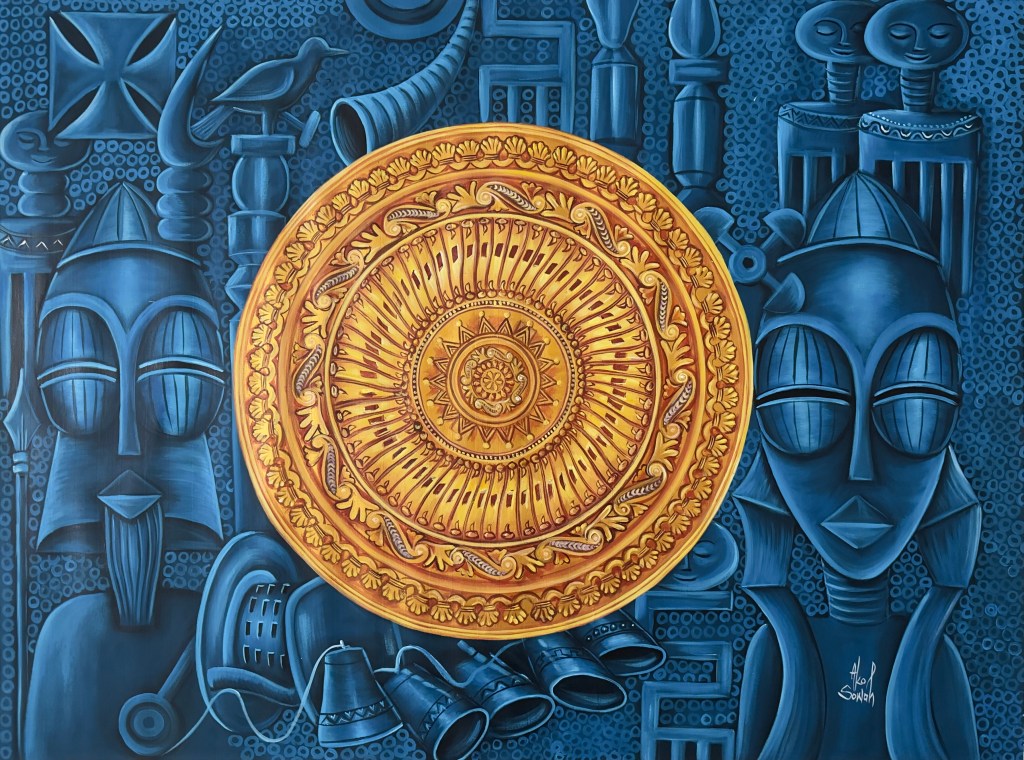
Resonance: A Solo Exhibition by Isaac Ako Sowa, features a collection inspired by the profound and symbolic lecture delivered by His Majesty Otumfuo Osei Tutu II, King of the Ashanti Kingdom, on 19th July 2024 at the British Museum.
References
Arhin, K. (1986). The Political and Military Organization of Pre-Colonial Asante. Accra: Ghana Universities Press.
McCaskie, T. C. (1995). State and Society in Pre-Colonial Asante. Cambridge: Cambridge University Press.
Wilks, I. (1993). Forest of Gold: Essays on the Akan and the Kingdom of Asante. Athens: Ohio University Press.
Adu-Boahen, A. (2000). Ghana: Evolution and Change in the Nineteenth and Twentieth Centuries. Accra: Sankofa Publishing.
Ross, D. H. (1998). Wrapped in Pride: Ghanaian Kente and African American Identity. Los Angeles: UCLA Fowler Museum.


