The Complete History of the Ashanti Kingdom: Part 8
Cultural Legacy of the Ashanti
By Kwadwo Afrifa – December 4, 2024 04:56pm
Introduction
The Ashanti Kingdom’s cultural legacy stands as one of the most enduring and influential in African history. From art and textiles to philosophy and spiritual practices, the Ashanti have made significant contributions that continue to shape Ghanaian identity and resonate on the global stage. This article explores the diverse aspects of the Ashanti cultural heritage, including their art, festivals, religion, philosophy, and influence on contemporary culture.
Art and Craftsmanship
Goldsmithing and Jewellery
- The Ashanti have long been renowned for their skill in goldsmithing, reflecting their historical dominance in the gold trade.
- Gold ornaments, such as rings, bracelets, and ceremonial swords, were often created with intricate designs and symbolic motifs, signifying wealth and status.
Textiles: The Kente Cloth
- Kente cloth, a handwoven fabric with vibrant patterns, is perhaps the most iconic Ashanti cultural product.
- Each pattern carries specific meanings, often reflecting proverbs, historical events, or moral teachings.
- Originally reserved for royalty, Kente has become a symbol of African identity and pride worldwide.
- Other traditional textiles, such as Adinkra cloth, are also significant, featuring symbols that communicate philosophical concepts.
Sculpture and Carving
- The Ashanti are known for their wooden stools, which hold both practical and spiritual significance.
- The Golden Stool, the most sacred symbol of the Ashanti, represents the soul of the Ashanti nation.
- Everyday stools, intricately carved with motifs, often signify the rank or achievements of their owners.
- Masks, drums, and statues, often used in rituals and festivals, also showcase the Ashanti’s artistic ingenuity.
Festivals and Celebrations
Akwasidae Festival
- Celebrated every six weeks, Akwasidae honours ancestors and the Golden Stool.
- The festival includes traditional drumming, dancing, and libations, bringing the community together to celebrate their shared heritage.
Adae Kese Festival
- A grander version of the Akwasidae Festival, Adae Kese marks significant historical events, such as the founding of the Ashanti Kingdom.
- It is an occasion for the Asantehene to reaffirm his leadership and for the community to reflect on their collective identity.
Funerals and Celebratory Rites
- Ashanti funerals are elaborate events that combine mourning with celebration, reflecting the belief in the continuation of life after death.
- Traditional music, drumming, and attire, particularly red and black fabrics, are integral to these ceremonies.
Spiritual Practices and Beliefs
Ancestor Worship
- Ancestor worship is central to Ashanti spirituality, with the belief that ancestors continue to guide and protect their descendants.
- Rituals, offerings, and libations are performed to honour ancestors and seek their blessings.
Nyame and the Pantheon of Deities
- The Ashanti believe in Nyame, the supreme god, who is supported by a pantheon of deities (abosom) responsible for various aspects of life and nature.
- Shrines and sacred groves are maintained as places of worship and spiritual reflection.
The Role of Priests and Priestesses
- Priests and priestesses serve as intermediaries between the physical and spiritual worlds, performing rituals, divinations, and healings.
- Okomfo Anokye, a legendary priest, remains a central figure in Ashanti mythology for his role in founding the kingdom.
Philosophy and Symbolism
Adinkra Symbols
- Adinkra symbols are visual representations of proverbs, philosophies, and historical events.
- Examples include Eban (symbol of security and safety) and Gye Nyame (symbol of the omnipotence of God).
- These symbols are found on textiles, pottery, and architecture, serving as tools for education and reflection.
Proverbs
- Ashanti proverbs encapsulate wisdom, ethics, and practical advice, often used in everyday conversations and formal speeches.
- Example: “The path does not close to a son who brings something.” (Signifying that respect and contributions open opportunities.)
Music, Dance, and Oral Traditions
Drumming and Music
- Drumming is a cornerstone of Ashanti culture, used in rituals, festivals, and communication.
- Different drum patterns convey specific messages, often tied to historical or spiritual themes.
Dance
- Traditional Ashanti dances, such as the Adowa, are rich in symbolism and performed at events ranging from funerals to royal ceremonies.
- Dance is often accompanied by storytelling, reinforcing community values and history.
Oral Traditions
- Griots and storytellers preserve Ashanti history, myths, and genealogies through oral narratives.
- These traditions have ensured the continuity of Ashanti identity across generations.
Cultural Influence Beyond Ghana
Pan-Africanism and Global Identity
- Ashanti cultural elements, particularly Kente cloth and Adinkra symbols, have become symbols of African pride and identity in the global diaspora.
- Figures in the African diaspora, such as Martin Luther King Jr., have worn Kente cloth to signify solidarity with African heritage.
Tourism and Cultural Exchange
- Ashanti festivals, crafts, and historical sites, such as the Manhyia Palace in Kumasi, attract tourists from around the world.
- Cultural diplomacy through artefacts and exhibitions has strengthened Ghana’s global reputation.
Challenges to Ashanti Cultural Preservation
Globalisation and Westernisation
- Western cultural influences and urbanisation have posed challenges to the preservation of traditional Ashanti practices.
- Younger generations, influenced by modern lifestyles, are less engaged with traditional customs.
Environmental and Economic Pressures
- Urban expansion and mining activities have threatened sacred groves, artisanal industries, and traditional practices.
Efforts to Preserve Culture
- The Asantehene and organisations like the Otumfuo Education Fund have supported cultural preservation initiatives, including the documentation of oral histories and the promotion of festivals.
- Schools and museums in the Ashanti Region are increasingly integrating cultural education into their programmes.
Conclusion
The cultural legacy of the Ashanti is a testament to their resilience, creativity, and influence. From the intricate designs of Kente cloth to the philosophical depth of Adinkra symbols, the Ashanti’s contributions continue to inspire pride within Ghana and across the African diaspora. While modernisation presents challenges, the Ashanti remain committed to preserving their heritage, ensuring that their traditions endure for future generations.
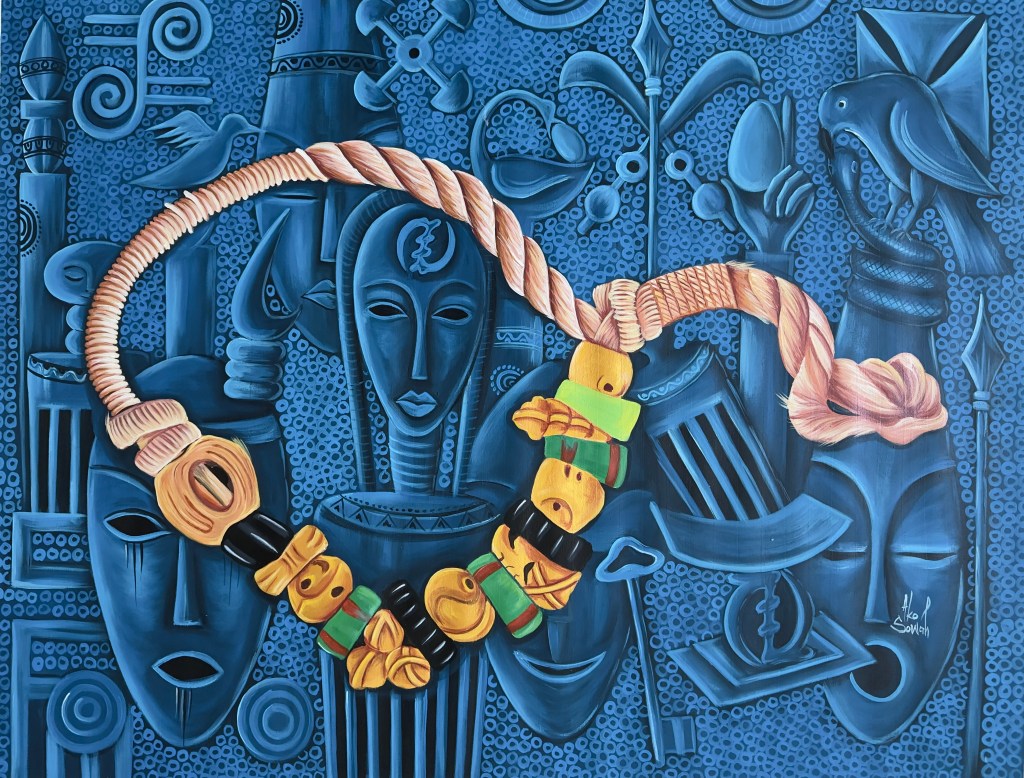
Resonance: A Solo Exhibition by Isaac Ako Sowa, features a collection inspired by the profound and symbolic lecture delivered by His Majesty Otumfuo Osei Tutu II, King of the Ashanti Kingdom, on 19th July 2024 at the British Museum.
References
Perani, J., & Wolff, N. H. (1999). Cloth, Dress, and Art Patronage in Africa. New York: Berg Publishers.
McCaskie, T. C. (1995). State and Society in Pre-Colonial Asante. Cambridge: Cambridge University Press.
Wilks, I. (1993). Forest of Gold: Essays on the Akan and the Kingdom of Asante. Athens: Ohio University Press.
Arhin, K. (1986). The Political and Military Organization of Pre-Colonial Asante. Accra: Ghana Universities Press.
Ross, D. H. (1998). Wrapped in Pride: Ghanaian Kente and African American Identity. Los Angeles: UCLA Fowler Museum.


