Spirits of the Forest, Guardians of the Island: Exploring the Diverse Cultures of Equatorial Guinea’s Fang and Bubi Peoples
By Kwadwo Afrifa – November 3, 2025 15:40am
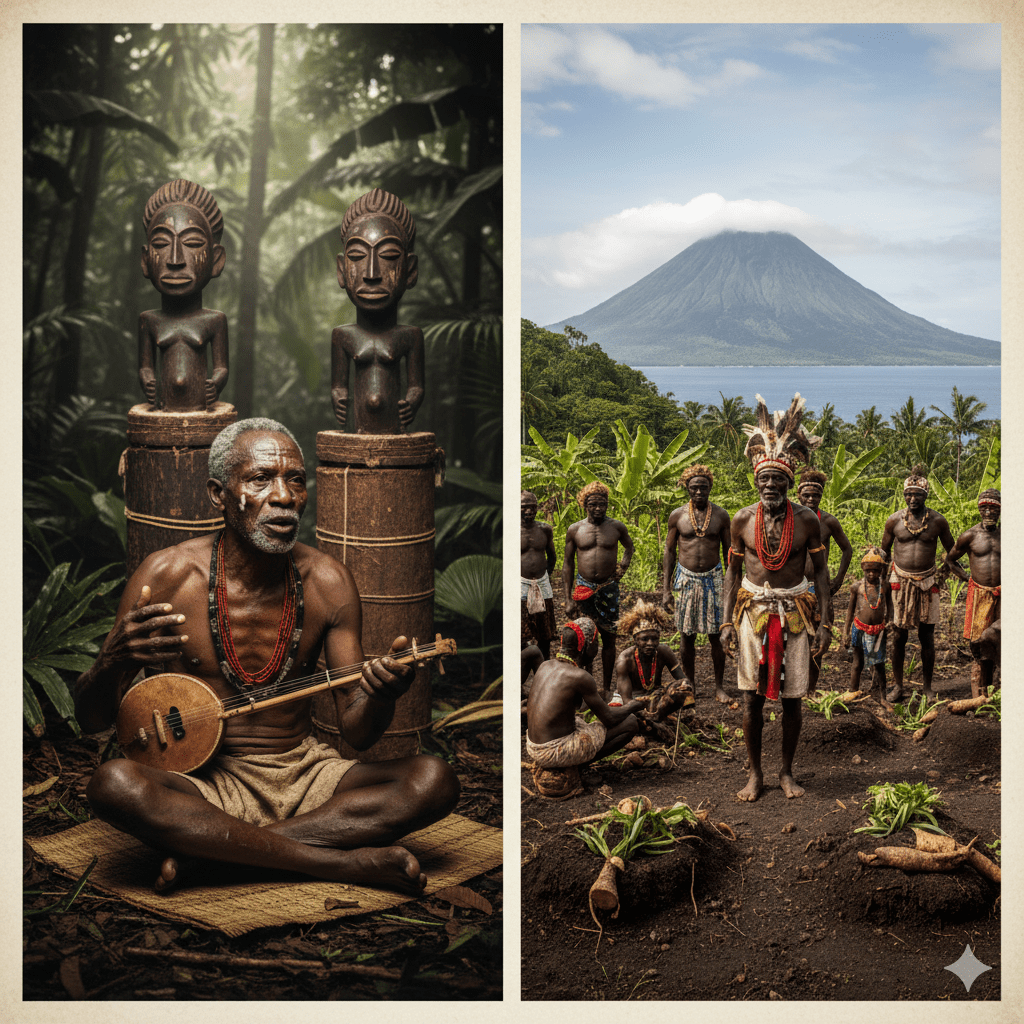
Our expansive journey through Africa’s diverse cultures now leads us to Equatorial Guinea, a unique nation with its mainland territory and the insular Bioko Island. Here, we delve into the distinct traditions of its two most prominent cultural groups: the Fang people, the largest ethnic group concentrated on the mainland, and the indigenous Bubi people of Bioko Island. Their separate histories, unique artistic expressions, and spiritual beliefs offer a compelling study of cultural adaptation to both dense equatorial forests and isolated island environments.
The Fang: Masters of Oral Tradition and Reliquary Arts
The Fang people, a Bantu-speaking group, are the dominant ethnic group on the mainland (Río Muni) of Equatorial Guinea, also having significant populations in Gabon and Cameroon. Their culture is deeply rooted in the equatorial rainforest, which has profoundly shaped their livelihoods and spiritual beliefs.
* Oral Traditions and Philosophy (Mvet): The Fang are renowned for their incredibly rich and complex oral traditions, particularly the Mvet. This epic narrative combines storytelling, poetry, and musical performance, recounting the adventures of heroes, the origins of clans, and philosophical insights. The Mvet is not just entertainment but a profound repository of Fang history, cosmology, and moral codes, often performed by master bards (Belinga, 1965).
* Reliquary Art (Bieri): Perhaps the most iconic Fang artistic tradition involves Bieri figures. These striking wooden sculptures, often depicting seated or standing ancestors with serene yet powerful expressions, were traditionally affixed to cylindrical bark boxes (nsek-bieri) containing the skulls and bones of revered ancestors. The Bieri figures served as guardians of these sacred relics, embodying the ancestral spirit and protecting the lineage. Their abstract and stylized forms have profoundly influenced modern Western art (Perrois, 1985).
* Forest Livelihoods and Societies: Historically, the Fang engaged in a combination of shifting cultivation (yams, plantains, cassava) and hunting/gathering. Various secret societies played crucial roles in initiation, social control, and the transmission of esoteric knowledge.
The Bubi: Indigenous Islanders with a Unique Heritage
The Bubi people are the indigenous inhabitants of Bioko Island (formerly Fernando Po), which is the insular part of Equatorial Guinea. Their unique history of isolation and subsequent interactions with various external forces has shaped a distinct island culture.
* Distinct Language and History: The Bubi language is a Bantu language unique to Bioko Island, underscoring their long history of separate development. Oral traditions recount their migrations to the island and their adaptation to its volcanic terrain and tropical climate.
* Traditional Governance (Botukus): Historically, Bubi society was organized into several distinct kingdoms or chieftaincies, each led by a botuku (king). These leaders held both political and spiritual authority. The Bubi developed sophisticated agricultural practices on the island, cultivating crops like yams, taro, and palm oil (Sundermeier, 1999).
* Spiritual Beliefs and Sacred Sites: Bubi traditional religion involves a belief in a supreme creator (Rupe) and various nature spirits associated with specific places on the island, such as mountains, forests, and streams. Sacred sites and rituals were important for maintaining harmony with the spiritual world.
* Resilience and External Influences: The Bubi faced significant external influences from European colonizers and labor migrants. Despite these pressures, they have shown remarkable resilience in preserving their language, customs, and unique cultural identity as the original inhabitants of Bioko (Kennedy, 1965).
Navigating Modernity
Both the Fang and Bubi peoples navigate the complexities of modern Equatorial Guinea, a nation rich in natural resources. While traditional practices may adapt to contemporary life, there is a strong emphasis on preserving their unique languages, artistic heritage, and oral traditions. Equatorial Guinea’s cultural diversity, exemplified by these two groups, forms a vital part of its national identity.
The Fang, with their profound oral epics and guardian Bieri figures, and the Bubi, with their unique island heritage and indigenous resilience, collectively contribute to the rich and diverse cultural landscape of Equatorial Guinea.
Our next journey will take us to Eritrea, where we will explore the traditions of the Tigrinya people, known for their Orthodox Christian faith, and the Tigre people, with their distinct language and Islamic adherence.
References:
* Belinga, E. (1965). L’épopée du Mvet: Mbèga. Présence Africaine.
* Kennedy, R. (1965). The People of Bioko Island: A Study of the Bubi. Routledge.
* Perrois, L. (1985). Arts du Gabon: Les cultures et les techniques de l’art. Nathan.
* Sundermeier, T. (1999). Theology in Context: A Case Study in Equatorial Guinea. Orbis Books.


