Heirs of the Golden Stool: Exploring the Imperial History and Rich Arts of Ghana’s Ashanti People
By Kwadwo Afrifa – November 4, 2025 18:00
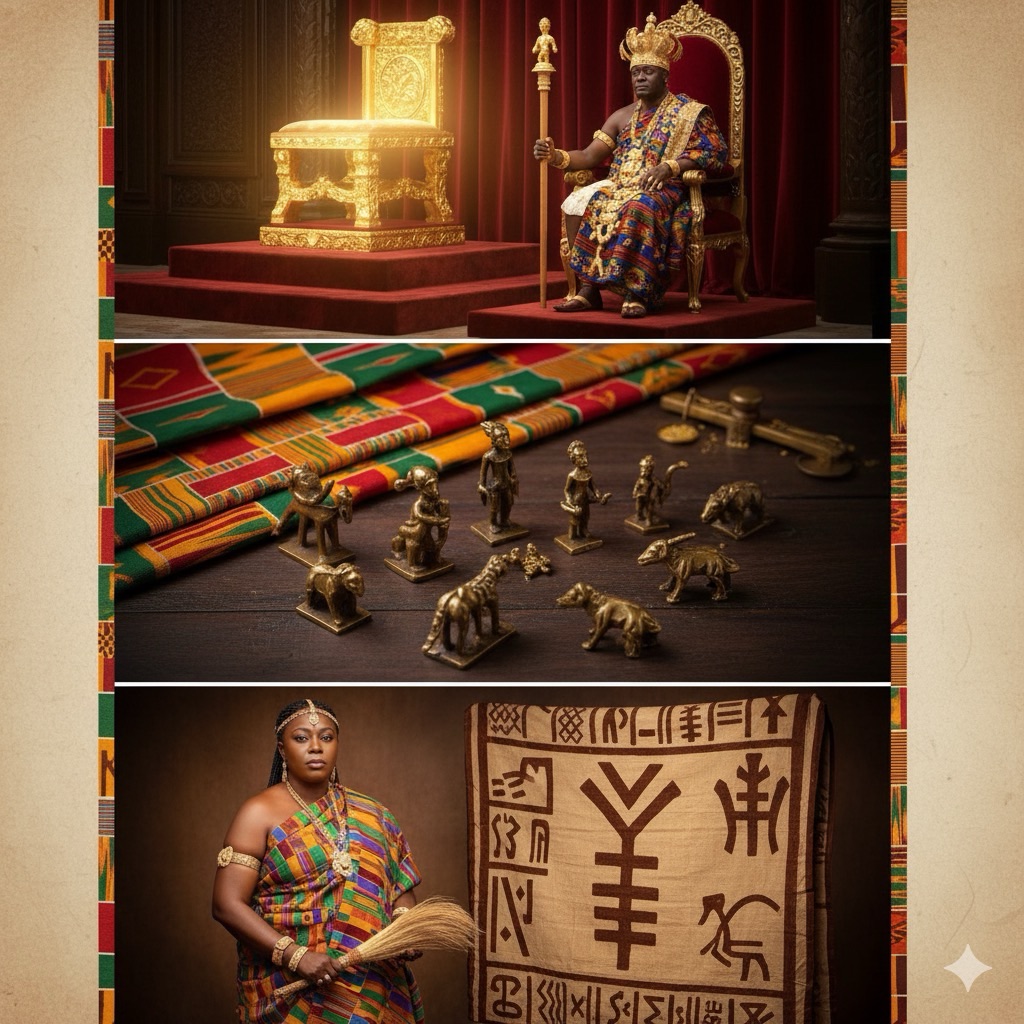
Our expansive journey through Africa’s diverse cultures now leads us to Ghana, the heartland of the Ashanti (Asante) people. As the core of the powerful Ashanti Empire that dominated a large part of West Africa for centuries, the Asante are renowned for their sophisticated political structure centered on the Golden Stool, their unparalleled goldworking traditions, the vibrant artistry of Kente cloth, and their deep-seated matrilineal social system. Their history is a testament to centralized power, military might, and profound artistic expression.
The Ashanti Kingdom (Asanteman) rose to prominence in the late 17th century in the forest region of what is now Ghana. Its formation was cemented by the legendary appearance of the Golden Stool, which became the ultimate symbol of the nation’s spiritual unity and power, superseding all chiefs and the King himself. This unique political and spiritual foundation allowed the Asante to build an extensive and wealthy empire (McLeod, 1981).
The Golden Stool and Divine Kingship
The Golden Stool (Sika Dwa Kofi) is the single most sacred and important symbol of the Ashanti nation. According to legend, it descended from the sky and landed on the knees of the first Asantehene (King), Osei Tutu I, at the command of the Chief Priest, Okomfo Anokye.
* Spiritual Symbolism: The Stool is believed to embody the soul and spirit of the entire Ashanti nation—living, dead, and yet to be born. It is never allowed to touch the ground and is guarded with extreme reverence.
* Political Structure: The Asantehene, seated in the capital of Kumasi, rules over a decentralized but unified state. His authority is derived from his ceremonial connection to the Golden Stool and is checked by a council of chiefs. The Ashanti political system is a remarkable example of a highly organized, centralized state built on spiritual legitimacy (Rattray, 1923).
The Art of Wealth: Goldworking and Adinkra
The Ashanti controlled the major gold-producing regions of West Africa (earning the region the name “Gold Coast”). This wealth fueled their military expansion and, critically, their extraordinary artistic output.
* Gold Regalia: Asante goldworking is world-renowned. The King and Queen Mother wear magnificent gold regalia (jewelry, crowns, sandals, and swords) that publicly display the wealth and spiritual power of the state.
* Gold Weights (Akan mmrammuo): Similar to their Akan relatives in Côte d’Ivoire, the Asante used intricate brass gold weights to measure gold dust. These miniature sculptures depict proverbs, cosmological concepts, and everyday life, serving as an archive of Ashanti cultural wisdom (McLeod, 1981).
* Adinkra Symbols: Adinkra is a cotton fabric adorned with traditional, non-verbal communication symbols stamped in natural dyes. Each symbol (e.g., Gye Nyame – “Except God”) carries a specific meaning, proverb, or concept, often used for funerals and important ceremonial occasions (Cole & Ross, 1977).
Kente Cloth: Woven Stories of Status and History
Kente cloth is perhaps the most globally recognized artistic contribution of the Asante. Originally woven from silk, and now often using rayon or cotton blends, it is a fabric of profound meaning and status.
* Meaning in Every Thread: Each Kente pattern, color, and motif has a specific name and historical significance, conveying messages about the weaver’s family history, the nation’s achievements, or philosophical proverbs. The cloth is traditionally reserved for royalty and spiritual leaders, though its use is now widespread for ceremonial occasions.
* Royal Weaving: The intricate weaving process, often done on narrow horizontal strip looms, requires great skill and patience, reflecting the elevated status of the cloth itself.
Matrilineal Society and Oral Tradition
Ashanti society is matrilineal (abusua), meaning lineage, inheritance, and succession to offices (including kingship) are traced through the female line. The Queen Mother (Asantehemaa) is a powerful political figure, advising the King and holding authority over the female population.
The Ashanti also maintain a rich oral tradition, with skilled historians (okyeame, or linguists) serving as advisors to the King, their staffs (often topped with gold-covered figures representing proverbs) symbolizing their verbal authority.
The Ashanti people, with their founding legend of the Golden Stool, their imperial political organization, their magnificent gold art, and the complex symbolism of Kente cloth, stand as a powerful cultural force in West Africa. Their legacy is one of a nation unified by spiritual belief and expressed through unparalleled artistry.
Our next article will take us to Guinea, where we will explore the traditions of the Susu people and the Baga people, renowned for their intricate initiation rituals and spectacular nimba shoulder masks.
References:
* Cole, H. M., & Ross, D. H. (1977). The Arts of Ghana. Museum of Cultural History, University of California, Los Angeles.
* McLeod, M. D. (1981). The Asante. British Museum Publications.
* Rattray, R. S. (1923). Ashanti. Clarendon Press.


