Heirs of Kanem-Bornu: Exploring the Islamic Heritage and Structured Society of the Kanuri People of Chad
By Kwadwo Afrifa – May 20, 2025 08:00am
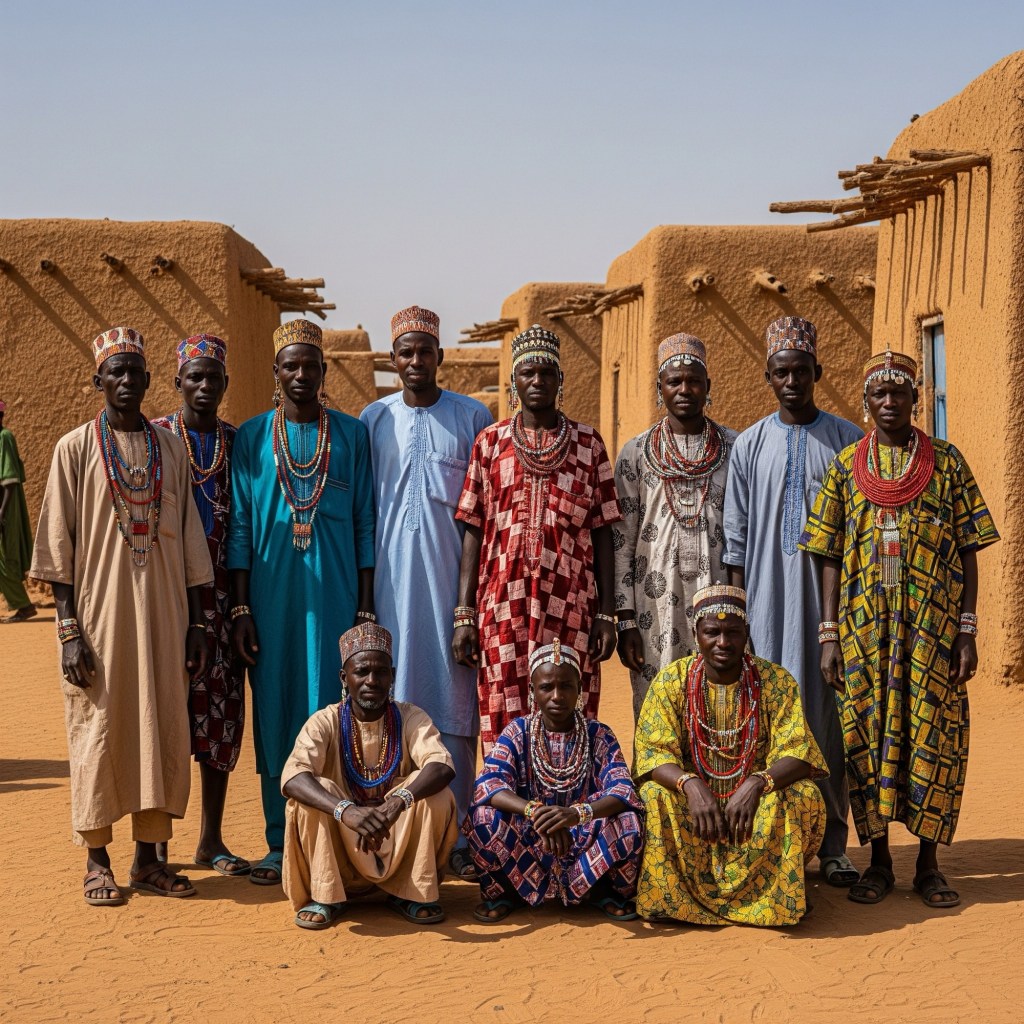
Our journey through Chad now takes us northeast, to encounter the Kanuri people, a significant ethnic group with a rich history deeply intertwined with the powerful Kanem-Bornu Empire. Known for their long-standing Islamic heritage, their distinct social structures, and their enduring traditions in crafts and scholarship, the Kanuri offer a fascinating glimpse into the historical and cultural complexities of the Lake Chad region.
The Kanuri language and identity are rooted in the legacy of the Kanem-Bornu Empire, which flourished for over a millennium, becoming a major center of trade, Islamic learning, and political power in Central Africa. The Sayfawa dynasty, which ruled the empire, played a crucial role in the adoption and spread of Islam in the region, leaving an indelible mark on Kanuri culture and social organization (Brenner, 1973).
A Legacy of Empire: Social Hierarchy and Governance:
Traditional Kanuri society is characterized by a relatively well-defined social hierarchy that historically mirrored the structure of the Kanem-Bornu Empire. At the apex was the Shehu (ruler), followed by a complex system of nobility, titled officials, and various occupational groups. Islamic scholarship held a position of high esteem, with learned individuals playing important roles in administration, law, and education. This historical legacy of centralized authority and social stratification continues to influence Kanuri society today (Cohen, 1967).
The Enduring Influence of Islam:
Islam is a central pillar of Kanuri identity and has deeply permeated their social, legal, and cultural practices for centuries. Islamic law (Sharia) traditionally played a significant role in governance and dispute resolution, and Islamic scholarship flourished in centers like Kukawa, the historical capital of Bornu. Religious festivals, prayers, and Islamic ethics are integral to daily life for many Kanuri (Lavers, 1997). Imagine the bustling centers of learning in the Kanem-Bornu Empire, where Islamic scholars debated and contributed to a rich intellectual tradition.
Art and Craftsmanship: Expressions of Skill and Tradition:
The Kanuri have a rich tradition of craftsmanship, with particular expertise in leatherworking, weaving, and metalworking. Leather goods, such as bags, saddles, and amulets, are often intricately decorated. Weaving, traditionally done by both men and women, produces colorful textiles used for clothing and mats. Metalworking, including the crafting of tools and ornaments, also holds a significant place in their artistic heritage. These crafts often incorporate traditional motifs and Islamic influences.
Oral Traditions and Historical Consciousness:
Oral traditions are vital for preserving Kanuri history, genealogies, and cultural knowledge, particularly the narratives surrounding the Kanem-Bornu Empire. Griots and other storytellers recount the deeds of past rulers, the migrations of clans, and the historical interactions with neighboring groups. These oral accounts contribute to a strong sense of historical consciousness and shared identity among the Kanuri people.
Agriculture and Trade: Pillars of the Economy:
Traditionally, the Kanuri economy was based on a combination of agriculture in the fertile lands around Lake Chad and extensive trade networks that connected the region with North Africa and other parts of West and Central Africa. The control of trade routes and agricultural production were key factors in the power and prosperity of the Kanem-Bornu Empire.
Adapting to Modern Chad and Nigeria:
Today, the Kanuri people are found primarily in northeastern Nigeria and western Chad, with significant populations in both countries. They continue to maintain their distinct cultural identity, their Islamic heritage, and many of their traditional social structures. However, the region has also faced challenges related to conflict and displacement, impacting Kanuri communities and their way of life. Despite these challenges, the legacy of the Kanem-Bornu Empire and their strong cultural traditions remain important aspects of their identity.
The Kanuri people, with their deep historical ties to the Kanem-Bornu Empire, their strong Islamic heritage, their structured society, and their rich traditions in crafts and oral history, offer a compelling example of the enduring influence of historical kingdoms and religious beliefs in shaping African cultures. Their story highlights the interconnectedness of history, culture, and identity in the Lake Chad region.
Our next journey will take us to the Comoros archipelago, where we will explore the unique Creole culture with its Swahili-based language and Islamic faith, and the distinct nuances of each island.
References:
* Brenner, L. (1973). The Shehus of Kukawa: A History of the Al-Kanemi Dynasty of Bornu. Clarendon Press.
* Cohen, R. (1967). The Kanuri of Bornu. Holt, Rinehart and Winston.
* Lavers, J. E. (1997). “The Islamization of the Hausa-Speaking Country: An Overview.” In The Early Spread of Islam in West Africa, edited by N. Levtzion and J. F. P. Hopkins, pp. 318-337. Cambridge University Press. (Provides context for the broader Islamization of the region, including the Kanuri.)


