Guardians of the Oasis, Nomads of the Great Desert: Exploring the Cultures of Libya’s Amazigh and Tubu Peoples
By Kwadwo Afrifa – November 13, 2025 14:00
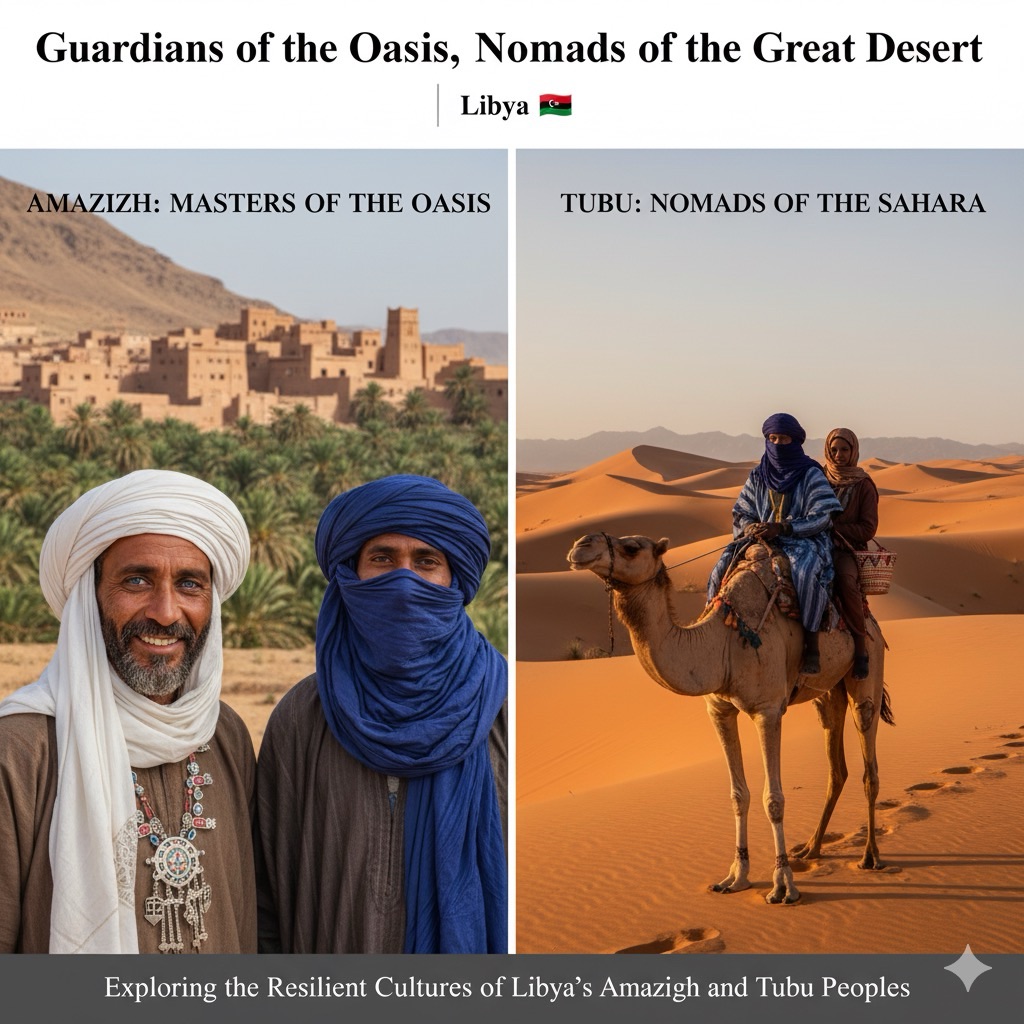
This image vividly portrays the contrasting yet equally resilient cultures of Libya’s Amazigh and Tubu peoples. On the left, two Amazigh men, one with an open, friendly face and the other veiled, stand before a traditional fortified village amidst an oasis, symbolizing their role as ‘Masters of the Oasis.’ On the right, two Tubu individuals traverse sweeping sand dunes on a camel, embodying their life as ‘Nomads of the Sahara.’ This visual narrative, titled ‘Guardians of the Oasis, Nomads of the Great Desert | Libya,’ reflects the diverse adaptations and enduring traditions explored in the article, ‘Exploring the Resilient Cultures of Libya’s Amazigh and Tubu Peoples.’
Our expansive journey through Africa’s diverse cultures now leads us to Libya, a vast nation spanning the Maghreb and the Sahara Desert. Here, we delve into the distinct traditions of the Amazigh (Berber) people, particularly their ancient language and cultural resilience along the coast and in the Nafusa Mountains, and the Tubu (Toubou) people, the intrepid nomadic inhabitants of the deep Saharan south. Their cultures reflect the profound impact of geography, from the Mediterranean shores to the remote desert interior.
Libya’s history is a mosaic of coastal empires, Mediterranean trade, and Saharan routes, which have shaped the identities of its diverse populations, leading to unique cultural adaptations in distinct ecological zones.
The Amazigh (Berber): Language and Resilience in the Northwest
The Amazigh people are one of North Africa’s oldest populations, with communities spread across the entire Maghreb. In Libya, they are concentrated primarily in the Nafusa Mountains (Jabal Nafusa) and in western coastal towns like Zuwarah.
* Ancient Language (Tamazight): The Amazigh maintain their distinct cultural identity primarily through their language, Tamazight (or various dialects of Zenata Berber). Despite centuries of Arabization, Tamazight is a vital marker of identity and cultural continuity, transmitted through oral traditions, songs, and poetry. Their traditional script, Tifinagh, is an ancient alphabet used for writing their language.
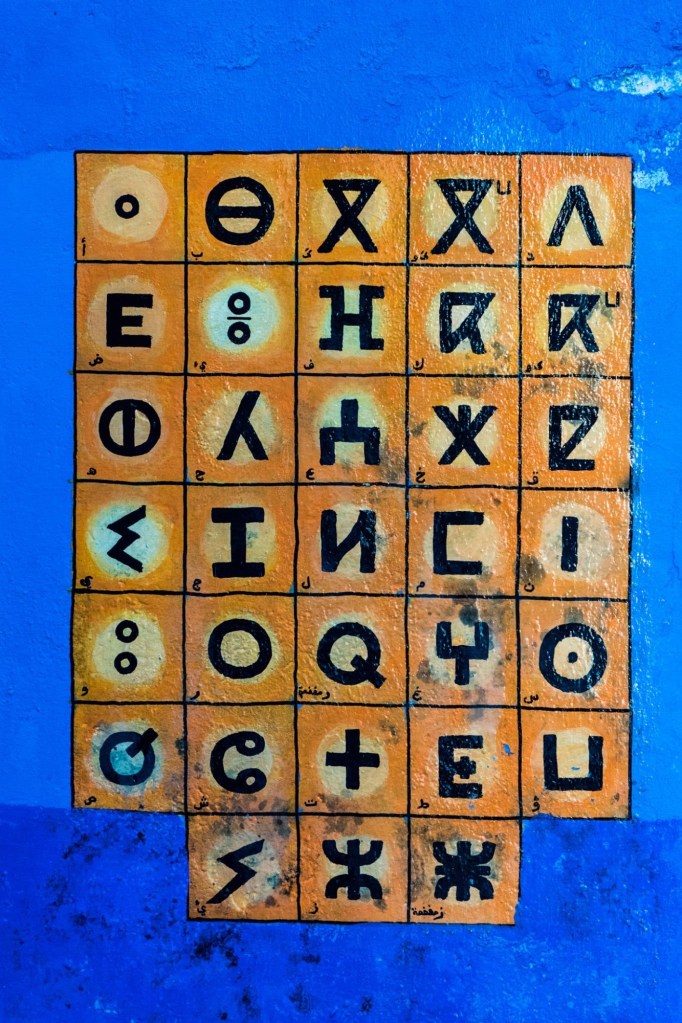
* Agricultural Traditions: In the Nafusa Mountains, the Amazigh developed sophisticated agricultural practices, including terracing and managing olive groves, well-suited to the rocky highland environment. They are also known for their traditional architecture, including unique subterranean houses (troglodyte dwellings) designed to protect against the desert heat.
* Cultural Resilience: The Amazigh have historically demonstrated immense cultural resilience, often maintaining their distinct customs, traditional law, and language in the face of various conquering empires and modern political pressures.
The Tubu (Toubou): Masters of the Sahara and the Trade Routes
The Tubu people are an ethnic group traditionally residing in the Sahara, primarily spanning southern Libya, northern Chad, and northeastern Niger. Their culture is a profound example of human adaptation to one of the world’s most inhospitable environments.
* Nomadic Pastoralism: The Tubu are traditionally nomadic pastoralists, specializing in the herding of camels and goats. Their life is defined by movement, following seasonal patterns in search of scarce water and pasture across the vast, arid terrain of the Saharan and Sahelian zones. This livelihood demands exceptional hardiness, self-reliance, and deep knowledge of desert geography (Chapelle, 1982).
* The Tibesti Connection: Many Tubu groups maintain strong cultural ties to the Tibesti Mountains (primarily in Chad), which served as a historical refuge and resource center. Their name, Tubu, means “rock people,” reflecting their connection to this massif.
* Guardians of the Trade Routes: Historically, the Tubu played a critical role in controlling and facilitating the trans-Saharan trade routes, acting as guides and providing protection for caravans traveling between the Mediterranean coast and Central Africa. This gave them significant political and economic influence in the desert interior.
* Language and Social Structure: The Tubu language (Tebu) belongs to the Nilo-Saharan language family, distinct from Arabic and Tamazight. Their society is organized around patrilineal clans, with a strong emphasis on independence and personal honor.
A Complex National Identity
Modern Libya’s national identity is predominantly Arab, but the presence of the Amazigh and Tubu communities is essential to understanding its full cultural depth. As the country navigates political and social transitions, respecting and integrating the distinct languages and historical contributions of these groups is a crucial element of national cohesion.
The Amazigh, with their ancient language and mountain traditions, and the Tubu, with their unparalleled mastery of the Sahara, collectively represent the deep cultural layers and environmental adaptations that characterize the complex identity of Libya.
Our next article will take us to Madagascar, where we will explore the diverse origins and traditions of the Merina people of the central plateau and the Sakalava people of the western coast.
References:
* Chapelle, J. (1982). Nomades noirs du Sahara. L’Harmattan. (In French, focused on the Tubu/Toubou).
* Keenan, J. (2004). The Lesser Gods of the Sahara: Social Change and Indigenous Rights. Frank Cass.
* Wilson, J. A. (1995). Libya. G. K. Hall.


