Guardians of the Nile, Nomads of the Desert: Exploring the Ancient and Enduring Cultures of Egypt’s Nubian and Bedouin Peoples
By Kwadwo Afrifa – May 30, 2025 07:00am
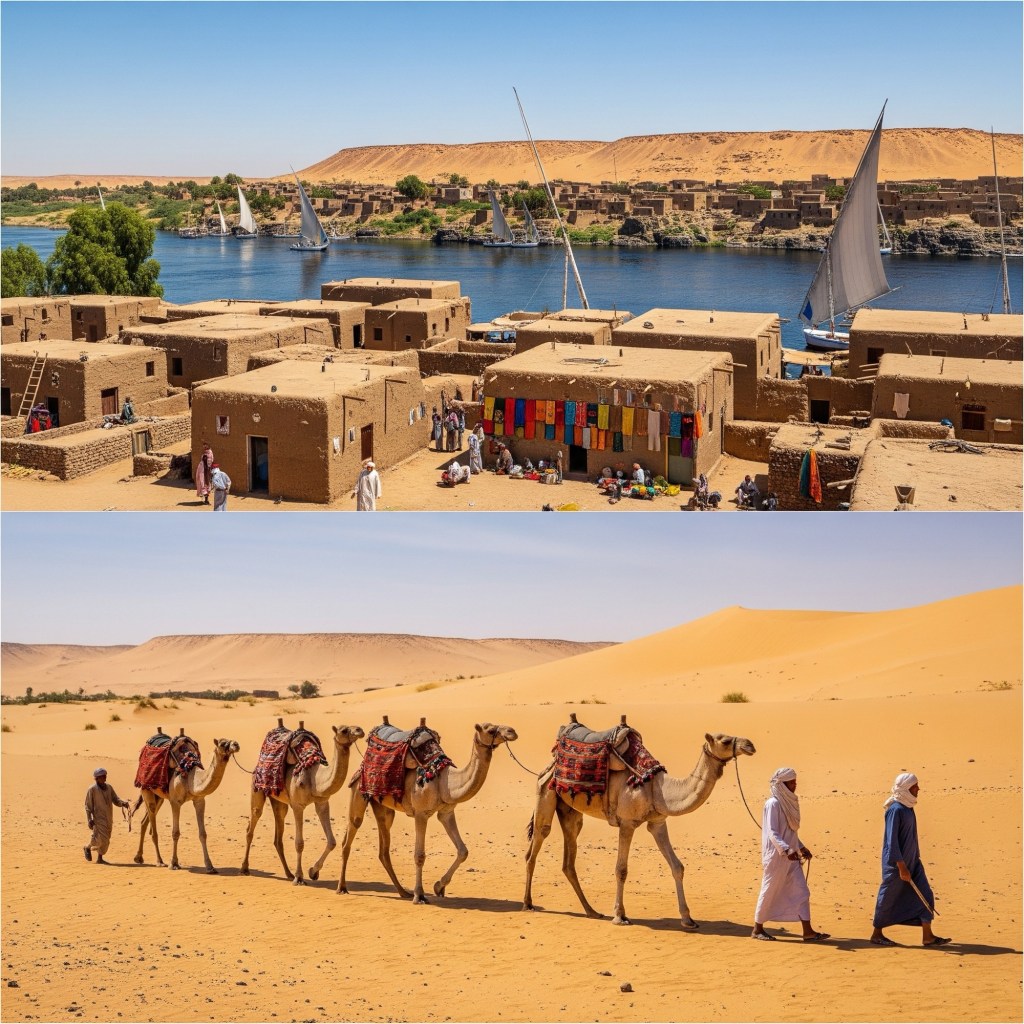
Our expansive journey through Africa’s diverse cultures now brings us to Egypt, a land synonymous with ancient civilizations and monumental history. Yet, beyond the pharaohs and pyramids, lie the vibrant and enduring cultures of the Nubian and Bedouin peoples. While distinct in their origins and environments—one rooted in the fertile Nile Valley, the other adapted to the vast deserts—both groups possess rich traditions, unique languages or dialects, and a profound connection to their ancestral lands, offering a compelling counterpoint to Egypt’s more widely known historical narratives.
The Nubians: Echoes of Ancient Kingdoms Along the Nile
The Nubians are an ancient people whose historical homeland, Nubia, straddles southern Egypt and northern Sudan, along the life-giving Nile River. Their civilization predates that of the pharaohs in some respects, with a history of powerful kingdoms, distinct artistry, and deep cultural ties to the river.
* Ancient Heritage: Nubia was home to successive ancient kingdoms, such as Kush (which at times conquered and ruled Egypt) and Meroë, known for their unique pyramids, sophisticated ironworking, and distinct writing systems. This long and proud history forms the bedrock of modern Nubian identity (Shinnie, 1996).
* Distinct Language and Music: Nubians speak their own distinct languages, belonging to the Nilo-Saharan language family, which are unrelated to Arabic. Music is a vibrant and central part of Nubian culture, characterized by soulful melodies, rhythmic drumming, and a strong vocal tradition. Songs often recount historical events, celebrate life, and express feelings of longing for their ancestral lands (El-Shamy, 1995).
* Life on the Nile: Traditionally, Nubian life revolved around the Nile River, with communities engaged in farming along its banks and fishing. Their distinctive mud-brick houses, often painted with colorful designs and symbols, reflect their artistic flair and adaptation to the riverine environment.
* Resilience and Displacement: In the 20th century, the construction of the Aswan High Dam led to the inundation of much of historical Nubia, forcing the displacement of thousands of Nubian communities. Despite this profound disruption, Nubians have shown remarkable resilience in preserving their cultural heritage, language, and communal bonds (Fahim, 1983).
The Bedouin: Nomads of the Desert, Masters of Hospitality
The Bedouin are nomadic Arab tribes primarily inhabiting the desert regions of Egypt, particularly the Sinai Peninsula and the Western Desert. Their culture is defined by their deep knowledge of the desert environment, their traditional hospitality, and a strong emphasis on tribal identity and self-reliance.
* Nomadic Lifestyle: Traditionally, Bedouin life revolves around nomadic pastoralism, herding camels, goats, and sheep across vast desert landscapes in search of pasture and water. This lifestyle has instilled a profound understanding of desert survival, navigation, and resource management (Cole, 2003).
* Strong Tribal and Kinship Ties: Bedouin society is organized around a strong tribal system, with loyalty to the extended family and clan being paramount. Traditional laws and customs often govern social interactions and dispute resolution, emphasizing collective responsibility and honor.
* Distinct Dialects and Oral Poetry: While speaking various dialects of Arabic, Bedouin speech is often distinct from urban Egyptian Arabic. Oral poetry (qasida) is a cherished art form, used to recount genealogies, celebrate courage, express love, and convey wisdom, serving as a vital medium for cultural transmission (Abu-Lughod, 1986).
* Hospitality and Self-Reliance: Hospitality (karam) is a cornerstone of Bedouin culture, with guests traditionally welcomed and protected. This value is deeply ingrained in their social code. Simultaneously, their nomadic existence fosters immense self-reliance and resourcefulness.
* Adapting to Change: While many Bedouin have partially or fully settled due to modernization, economic opportunities (like tourism), and state policies, they often maintain strong ties to their traditional ways, including their distinct dress, social gatherings, and a profound respect for their heritage.
A Shared Future in a Land of Ancient Legacy
Both the Nubian and Bedouin communities in Egypt, while geographically and historically distinct, contribute immensely to the country’s diverse cultural mosaic. As Egypt continues to develop, preserving these unique traditions, languages, and ways of life is crucial for maintaining the rich tapestry of its national identity. Their stories remind us that culture is not static but a living, evolving entity shaped by environment, history, and human resilience.
Our next article will take us to Equatorial Guinea, where we will explore the traditions of the Fang people, the largest ethnic group, and the indigenous Bubi of Bioko Island.
References:
* Abu-Lughod, L. (1986). Veiled Sentiments: Honor and Poetry in a Bedouin Society. University of California Press.
* Cole, D. P. (2003). “Bedouin.” Encyclopedia of World Cultures, Vol. 9: Africa and the Middle East, edited by D. Levinson, pp. 29-32. G.K. Hall & Co.
* El-Shamy, H. M. (1995). Folktales of Egypt. University of Chicago Press. (Includes references to Nubian oral traditions and their distinctiveness).
* Fahim, H. M. (1983). Egyptian Nubians: Aswan Dam and Resettlement. University of Utah Press.
* Shinnie, P. L. (1996). Ancient Nubia. Kegan Paul International.


