From Desert Sands to Coastal Breezes: Exploring the Nomadic and Trading Cultures of Djibouti’s Somali and Afar Peoples
By Kwadwo Afrifa – July 15, 2025 10:00am
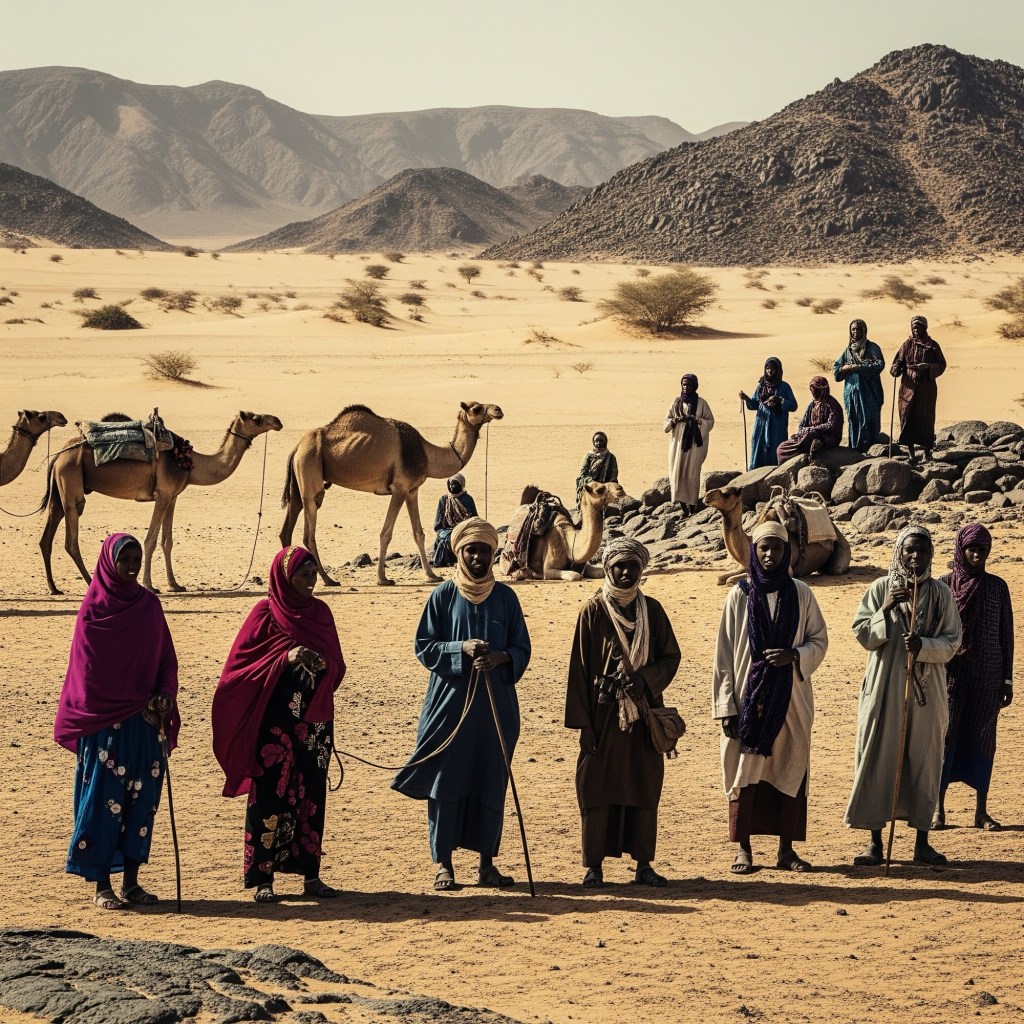
Our expansive journey through Africa’s diverse cultures now takes us to the Horn of Africa, to the strategically vital nation of Djibouti. Here, amidst scorching desert landscapes, volcanic terrain, and a coastline embracing the Red Sea and Gulf of Aden, we encounter the primary cultural groups: the Somali and the Afar. While both are traditionally nomadic pastoralists adapted to harsh environments, they possess distinct languages, histories, and cultural nuances that define their enduring presence in this dynamic region.
Djibouti’s history is deeply shaped by its location at the crossroads of ancient trade routes, connecting Africa with the Arabian Peninsula. Both the Somali and Afar have historically played crucial roles in this trade, influencing their interactions and shaping their societies (Lewis, 1999).
The Somali: Guardians of Oral Tradition and Trade
The Somali in Djibouti are part of the larger Somali ethnic group, whose traditional lands stretch across Somalia, Ethiopia, and Kenya. Their culture is characterized by:
* Strong Oral Tradition: Somali culture is profoundly rooted in oral poetry (gabay, jiifto, guuro), storytelling, and proverbs. These oral forms serve as powerful vehicles for preserving history, transmitting moral values, resolving disputes, and expressing social commentary. The ability to compose and recite poetry is highly valued (Andrzejewski & Lewis, 1964).
* Nomadic Pastoralist Roots: Traditionally, many Somali live a nomadic or semi-nomadic pastoralist lifestyle, moving with their herds of camels, goats, and sheep in search of pasture and water. This way of life has instilled a deep knowledge of the desert environment, resilience, and a strong emphasis on self-reliance.
* Islamic Heritage: Islam, predominantly Sunni, is central to Somali identity and daily life, influencing social customs, legal practices, and ethical norms. Mosques are integral to community life, and religious festivals are observed with great importance.
* Clan System: Somali society is organized around a complex clan system, which historically determined social relations, political alliances, and traditional forms of governance. While modern states have introduced new administrative structures, clan affiliations continue to hold significance.
The Afar: Resilience in the Danakil Depression
The Afar people (also known as Danakil) primarily inhabit Djibouti, Eritrea, and Ethiopia, often in some of the world’s most extreme desert environments, notably the Danakil Depression. Their culture reflects their remarkable adaptation to this challenging landscape:
* Nomadic Lifestyle and Salt Trade: The Afar are renowned for their nomadic pastoralist lifestyle, herding camels, cattle, and goats. Historically, they dominated the lucrative salt trade, extracting salt from the scorching salt flats of the Danakil Depression and transporting it across the region. This trade cemented their economic power and shaped their social interactions (Abdallah, 1986).
* Distinct Language: The Afar language (Afaraf) belongs to the Cushitic branch of the Afroasiatic family and is distinct from Somali. It is a vital marker of Afar identity and carries their unique oral traditions and knowledge.
* Warrior Ethos and Traditional Structures: Traditionally, the Afar had a strong warrior ethos and a decentralized social structure based on kinship groups and sultanates. Leadership roles were earned through bravery and skill, particularly in managing resources and defending territory in a harsh environment.
* Resilience and Adaptability: Their ability to thrive in extremely arid conditions, utilizing deep knowledge of scarce water sources and pasture, highlights their incredible resilience and adaptability.
A Shared Future in a Strategic Location
Both the Somali and Afar communities in Djibouti, while maintaining their distinct traditions, share the experience of living in a nation of significant geopolitical importance. Djibouti’s port and strategic location have led to increased urbanization and a blend of traditional and modern livelihoods. Efforts to preserve their unique languages, oral traditions, and traditional knowledge are crucial as they navigate the complexities of a rapidly changing globalized world.
The Somali and Afar peoples, with their deep roots in nomadic pastoralism, their strong oral traditions, their distinct languages, and their remarkable adaptation to the challenging landscapes of the Horn of Africa, offer a compelling glimpse into the diverse and resilient cultures that shape Djibouti’s identity.
Our next article will take us to Egypt, where we will explore the enduring traditions of the Bedouin and Nubian peoples.
References:
* Abdallah, R. (1986). The Afar of the Horn of Africa. International African Institute.
* Andrzejewski, B. W., & Lewis, I. M. (1964). Somali Poetry: An Introduction. Clarendon Press.
* Lewis, I. M. (1999). A Modern History of the Somali: Nation and State in the Horn of Africa. Ohio University Press.

