Echoes of Ancient Faiths and Nomadic Rhythms: Exploring the Diverse Cultures of Eritrea’s Tigrinya and Tigre Peoples
By Kwadwo Afrifa – June 02, 2025 16:35am
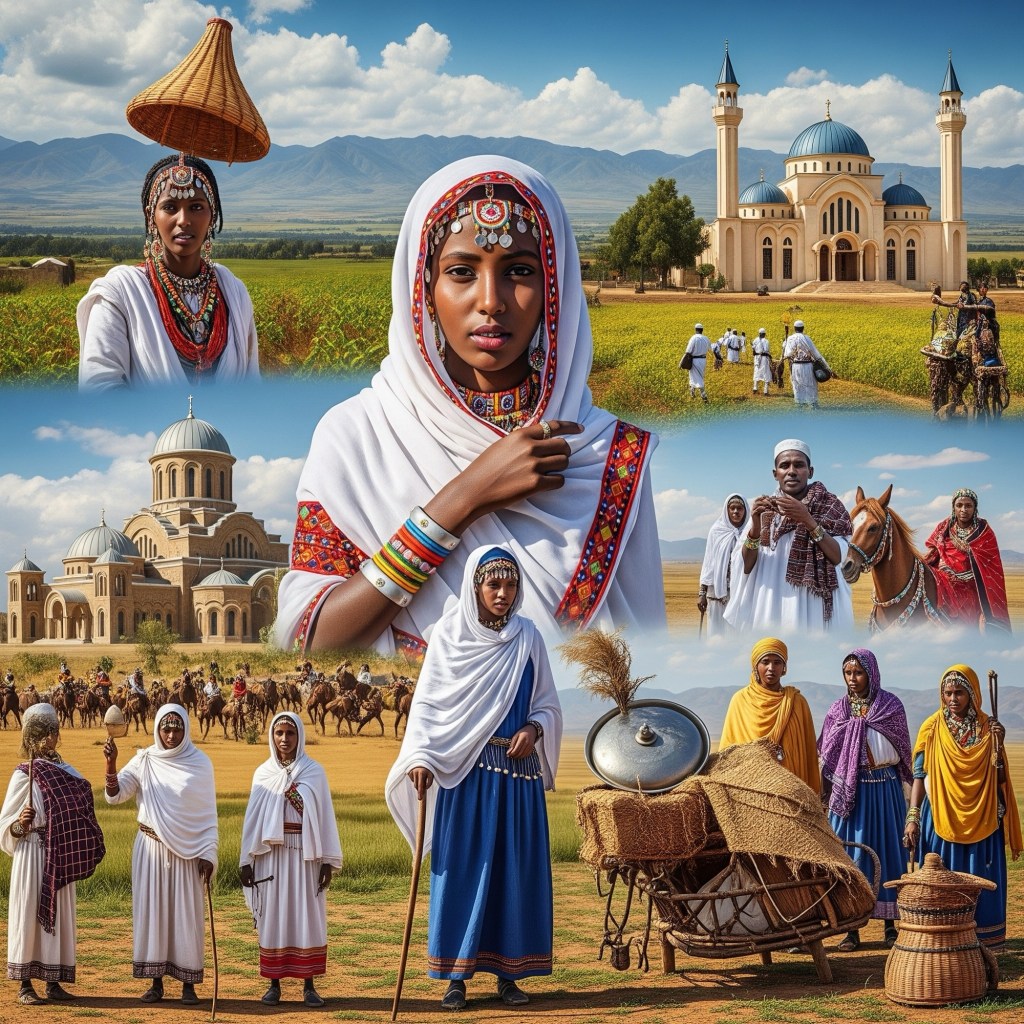
Our expansive journey through Africa’s diverse cultures now brings us to Eritrea, a nation situated on the Red Sea coast of the Horn of Africa. Here, we delve into the distinct traditions of its two largest ethnic groups: the Tigrinya and the Tigre peoples. While sharing geographical proximity and historical ties, their cultural identities are shaped by divergent religious affiliations, unique linguistic expressions, and different traditional livelihoods, offering a compelling study of cultural interaction and distinctiveness.
Eritrea’s history is marked by its strategic location along ancient trade routes, its long interactions with various empires and religions, and its complex colonial past. These historical layers have profoundly influenced the development of its diverse ethnic groups (Pankhurst, 1997).
The Tigrinya: Guardians of Orthodox Christian Heritage
The Tigrinya people are the largest ethnic group in Eritrea, also having a significant presence in neighboring Ethiopia (where they are known as Tigrayans). Their culture is deeply rooted in ancient traditions and a strong Orthodox Christian faith.
* Orthodox Christian Faith: The Tigrinya are predominantly adherents of the Eritrean Orthodox Tewahedo Church, a faith with roots stretching back to the 4th century CE. This ancient Christian heritage permeates every aspect of their lives, from daily rituals and social customs to their rich calendar of religious festivals. Monasteries and churches are central to community life and hold significant historical and artistic treasures (Phillipson, 2012).
* Agricultural Traditions: Traditionally, the Tigrinya are agriculturalists, cultivating crops such as teff (a staple grain), wheat, and barley in the fertile highlands. Their agricultural practices are often closely linked to the rhythms of the seasons and traditional knowledge passed down through generations.
* Rich Oral Literature and Ge’ez Script: The Tigrinya language (Tigrinya or Tigrigna) is a Semitic language. They possess a rich oral literature, including proverbs, folktales, and epic poetry. Their written tradition utilizes the ancient Ge’ez script, shared with Amharic and Amharic Orthodox liturgy, reflecting their deep historical and religious connections.
* Social Structures and Customs: Tigrinya society is generally organized around extended families and villages, with a strong emphasis on communal responsibility and traditional legal systems (Higi). Social events like weddings and funerals are elaborate affairs, rich in ritual and communal participation.
The Tigre: Nomadic Echoes and Islamic Adherence
The Tigre people are another major ethnic group in Eritrea, primarily inhabiting the northern and western lowlands. While linguistically related to the Tigrinya, they possess distinct cultural traditions, largely shaped by their historical nomadic lifestyles and their predominantly Islamic faith.
* Distinct Language and Oral Tradition: The Tigre language (Tigre) is also a Semitic language, closely related to Tigrinya but distinct. It is primarily an oral language, with a rich tradition of poetry, songs, and storytelling that reflects their history, values, and nomadic experiences (Ullendorff, 1965).
* Nomadic and Semi-Nomadic Livelihoods: Traditionally, many Tigre are nomadic or semi-nomadic pastoralists, herding camels, cattle, and goats across the lowlands. This lifestyle has instilled a deep knowledge of their environment, resilience, and a strong emphasis on tribal solidarity. Some Tigre groups also engage in agriculture.
* Islamic Faith: The Tigre are predominantly Muslim, their adherence to Islam influencing their social customs, legal practices, and daily rhythms. Islamic festivals are central to their communal life, and the values of the Quran are deeply integrated into their worldview.
* Tribal Organization: Tigre society is traditionally organized around tribal and clan affiliations, which play a significant role in social relations, land use, and political leadership. Elders hold respected positions, guiding communities through traditional law and customary practices.
Navigating a Shared Future
Both the Tigrinya and Tigre peoples, while culturally distinct, are integral to the national identity of Eritrea. The nation has faced significant challenges throughout its history, including a long struggle for independence and ongoing regional tensions. Despite these, both communities strive to preserve their unique traditions, languages, and religious heritage, contributing to the rich cultural mosaic of Eritrea.
The Tigrinya, with their ancient Orthodox Christian heritage and agricultural roots, and the Tigre, with their nomadic traditions and Islamic faith, offer a compelling study of cultural diversity within a single nation. Their stories highlight the complex interplay of history, religion, language, and environment in shaping African identities.
Our next journey will take us to Eswatini (Swaziland), where we will explore the traditions of the Swazi people, renowned for their unified kingdom, vibrant ceremonies like Umhlanga and Incwala, and deep respect for their monarchy.
References:
* Pankhurst, R. (1997). The Ethiopians: A History. Blackwell Publishers. (Provides general historical context for the Horn of Africa, including Eritrea).
* Phillipson, D. W. (2012). Ancient Ethiopia and the Horn of Africa. Cambridge University Press. (Focuses on the ancient history of the region and the spread of Christianity).
* Ullendorff, E. (1965). The Ethiopians: An Introduction to Country and People. Oxford University Press. (Discusses the languages and cultures of the region, including Tigre).


